In brief
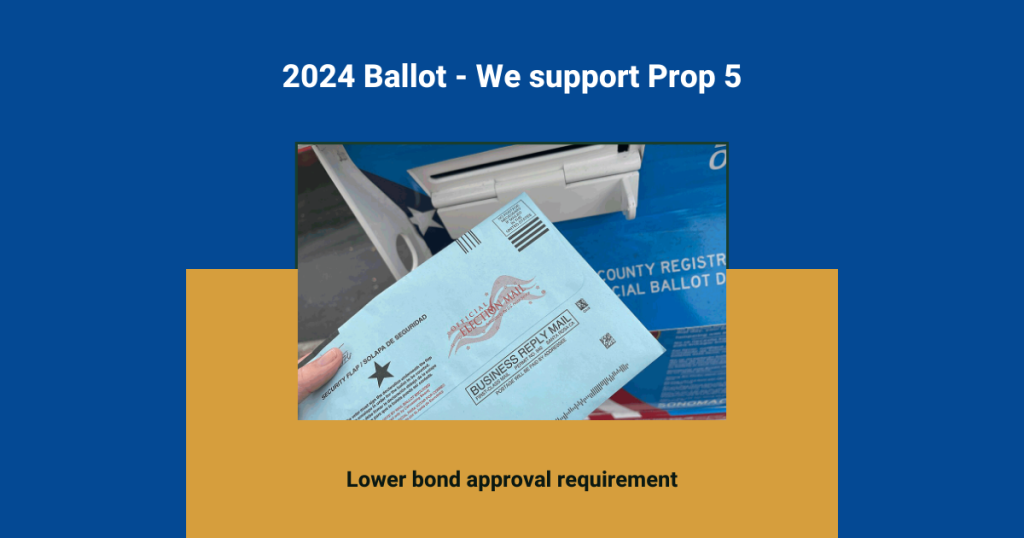
We support Prop 5 (2024) because a majority in any community should be able to make bond financing decisions to build critical things like affordable housing and infrastructure. Prop 5 would implement the exact terms of approval that already apply to public debt for education.
We note that Prop 5 (2024) requires clear accountability in debt approved by vote, including oversight measures. Prop 5 (2024) will enable the funding of critically essential projects that will serve the well-being of many, such as affordable housing. Our Housing and Shelter Task Force recommends support for this ballot item.
Download a copy of this resource here.
In this post
What would Prop 5 do?
California makes it difficult for local governments to borrow money. Not only do most city and county bonds require voter approval, they need the support of at least two-thirds of those voting to pass.
Proposition 5 would amend the California constitution by lowering the required borrowing threshold to 55% to fund affordable housing construction, down payment assistance programs, and a host of “public infrastructure” projects, including water management, local hospitals and police stations, broadband networks, and parks.
If it passes, the new cut-off would apply to future bonds and any on the ballot this November. That includes a proposed $20 billion affordable housing bond in the San Francisco Bay area.
Lower Approval Thresholds for Bond Measures: A Fairness Analysis
The argument for lower approval thresholds for bond measures often centers on representing the broader public interest.
Here’s a breakdown of the key points:
Reflecting the Majority’s Will
- Democratic Principle: In a democratic system, decisions should generally reflect the will of the majority. A lower threshold allows for projects that most voters support to proceed, even if they don’t reach a traditional supermajority.
- Public Interest: Many bond measures are for essential public services like education, infrastructure, or affordable housing. The public often supports these measures; a lower threshold enables these needs to be met.
Overcoming Obstacles to Progress
- Minority Veto: A high approval threshold can give a small minority the power to block projects supported by the majority, hindering progress on critical issues.
- Gridlock: In polarized political environments, high thresholds can lead to gridlock, preventing necessary investments in public services.
Accountability and Oversight
- Counterargument: It’s essential to note that lowering the threshold doesn’t mean a lack of accountability. Bond measures typically include oversight mechanisms, such as independent audits and citizen committees, which ensure funds are used appropriately.
Specific Considerations
- Type of Bond: The appropriateness of a lower threshold can depend on the kind of bond. For example, a bond to fund essential infrastructure is more critical than one for a specific recreational facility.
- Economic Climate: Economic conditions can also influence the argument. In financial hardship, voters might be more conservative, making a lower threshold more appealing.
It’s essential to balance the desire to ensure broad public support with the need to allow for progress on crucial projects. Lower approval thresholds can be a tool to achieve this balance, but it’s vital to consider the specific context of each bond measure. This is a reason to support Prop 5.
Lower Approval Thresholds for Bond Measures: A Faith Analysis
Here are several compelling reasons why faith communities should support lower approval thresholds for bond measures that support affordable housing in California:
Moral and Ethical Imperative:
- Religious and spiritual teachings often emphasize helping the less fortunate, providing shelter, and creating a just and equitable society. Affordable housing is a fundamental human need, and supporting bond measures aligns with these values.
Addressing Homelessness Crisis:
- California faces a severe homelessness crisis, with many people living on the streets. Affordable housing is a crucial solution to this problem. By supporting bond measures, faith communities can actively contribute to reducing homelessness and improving the lives of their fellow citizens.
Community Well-being:
- Stable and affordable housing is essential for individuals and families to thrive. It contributes to better health, educational outcomes, and overall well-being. Investing in affordable housing benefits the entire community, not just those directly receiving the housing.
Economic Impact:
- Affordable housing development creates jobs, stimulates the economy, and improves property values in surrounding areas. Supporting bond measures can have a positive economic impact on the state and local communities.
Practical Considerations:
- Many faith communities already engage in social service programs, including providing meals or temporary shelter. Affordable housing complements these efforts by offering a more sustainable and long-term solution to housing insecurity.
Collaboration and Partnership:
- Bond measures often involve collaboration between government agencies, non-profits, and community organizations. Faith communities can play a valuable role in this partnership, providing support, resources, and advocacy.
Specific Actions:
- Faith communities can support bond measures by:
- Educating their congregation about the issue
- Encouraging members to vote in favor of the measure
- Offering resources or volunteer support to affordable housing initiatives
- Partnering with other organizations to advocate for increased funding for affordable housing
In summary, supporting bond measures for affordable housing is a natural extension of many faith communities’ core values. It can significantly positively impact individuals’ lives and the overall well-being of California communities. If we support building affordable housing, we should support Prop 5.
Read the articles below or the Housing and Shelter Task Force for further information on housing matters.
General Information on Ballot Items
For more information and recommendations on all of the ballot items, please consider these sources:
- California League of Women Voters – Ballot Recommendations
- California Council of Churches IMPACT – Recommendations
- Friends Committee on Legislation of California – Recommendations
For more information on the ballot items themselves, please consider these sources: